For asphalt plant managers, the exhaust stack is more than just a piece of hardware—it is a continuous compliance gauge. The intense thermal load, sticky hydrocarbon vapors, and heavy aggregate dust generated during hot mix production create one of the most punishing environments for industrial air filtration. One misstep in your dust collection strategy doesn't just mean an environmental citation; it directly threatens your daily production capacity.
Achieving consistent emissions below 10 mg/Nm³ while keeping operating costs under control requires moving beyond standard maintenance. It demands a granular understanding of how your filtration media interacts with structural gas flow. This comprehensive guide breaks down the core engineering principles needed to maximize the efficiency of your asphalt baghouse and slash your Total Cost of Ownership (TCO).
Dust emissions in an asphalt mixing station are highly dynamic. The process begins in the rotary drying drum, where cold aggregates are heated and cascaded, creating a massive upstream dust load. Subsequent stages—including the hot elevator, screen decks, and aggregate weigh hoppers—generate fine, abrasive particulates that must be continuously evacuated under negative pressure.
With global standards like the US EPA NESHAP, European BREF directives, and localized green manufacturing mandates tightening yearly, relying on outdated filtration designs is a liability. Modern baghouse systems are no longer treated as simple add-ons; they are high-precision reactors that determine whether a plant is legally permitted to operate.
Deploying a bag filter as a single-stage solution against raw drum exhaust is a recipe for premature fabric failure. Coarse aggregate particles traveling at high velocity act like sandblasters, cutting through fabric fibers within weeks. To prevent this, a highly optimized two-stage interception setup is mandatory:
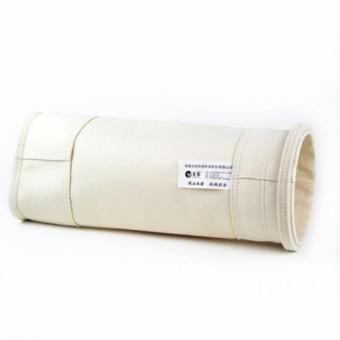
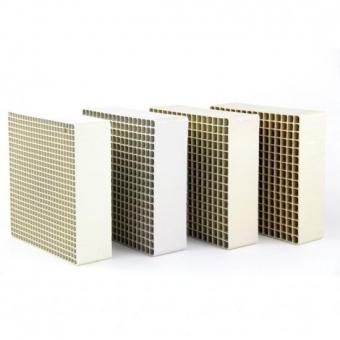
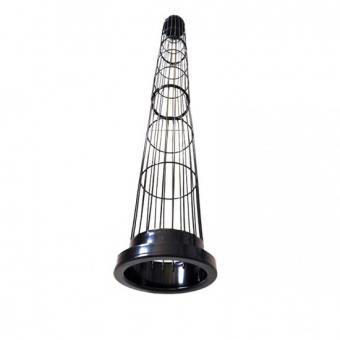
Precision Grid Alignment of High-Temperature Bag Filters for Industrial Smelting and Asphalt Plants
The operational survival of your baghouse relies entirely on the chemical and thermal limits of your filter media. Flue gases leaving an asphalt drum consistently hover between 140°C and 180°C, frequently spiking during burner adjustments. Standard polymers like polyester fail instantly under these thermal conditions.
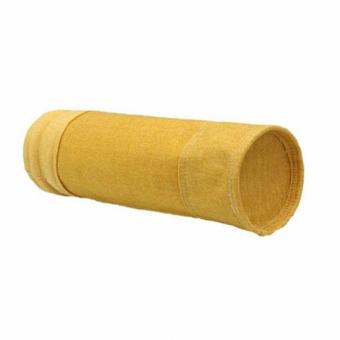
To combat this, industrial plants utilize specialized Aramid Needle Felt (Nomex® equivalent). Aramid fibers offer excellent structural retention at continuous temperatures up to 200°C and exhibit superb resistance to chemical degradation from acid dew point corrosion (caused by sulfur oxides in the flue gas).
For operations utilizing high-moisture fuels or processing complex recycled asphalt pavement (RAP), standard needle felt can be enhanced with an ultra-thin PTFE membrane surface coating. The membrane shifts filtration from depth-loading to surface-loading, preventing sticky liquid hydrocarbons from blinding the pores and ensuring dust cakes release cleanly during every pulse cycle.
Jetting compressed air down the center of a filter bag removes the dust cake, but excessive or uncontrolled cleaning is a major cause of mechanical fabric fatigue. When a plant experiences erratic differential pressures, it usually points to a mistuned cleaning system rather than a problem with the bags themselves.
Upgrading to digital differential-pressure-based cleaning controllers yields immediate operational dividends compared to rigid, timer-based cycles. Let's look at authenticated field performance metrics from a facility that replaced its legacy pneumatic controls with a smart-sensor upgrade:
| Operational Metric | Legacy Control Cycle | Smart-Sensor Control | Net System Benefit |
|---|---|---|---|
| Average Differential Pressure | 1,650 Pa | 1,100 Pa | 33% Fan Energy Reduction |
| Compressed Air Consumption | High (Continuous) | Low (On-Demand) | Reduced Compressor Wear |
| Filter Bag Replacement Frequency | Every 12 Months | Every 24+ Months | 50% Procurement Savings |
| Plant Production Output | Restricted Draft | Optimized CFM Flow | Increased Daily Tonnage |
To prevent catastrophic plant downtime, operators should adhere to strict daily and sequence-specific parameters during every hot mix shift:
When system warnings occur, use this quick reference matrix to isolate root causes:
| System Anomaly | Probable Mechanical Root Cause | Immediate Corrective Action |
|---|---|---|
| Sudden Stack Opacity / Leakage | Misaligned blowpipes, torn seams, or unseated snap-bands. | Conduct a fluorescent powder leak test; locate and replace failed elements; lock snap-bands firmly into cell plates. |
| Uncontrollable Pressure Drop (>1,800 Pa) | Hydrocarbon blinding or dew point moisture condensation. | Check inlet gas temperatures; ensure pre-heating sequence is ; check for oily fuel residue on the media. |
| Localized Fabric Abrasion | Pre-separator failure or structural baffle wear allowing coarse stones to impact bags. | Inspect internal wear plates and cyclone seals; patch holes in internal ductwork bypass channels. |
In modern industrial manufacturing, your environmental footprint is tied directly to your financial performance. A poorly engineered baghouse throttles airflow, limits your hourly hot mix tonnage, and burns excessive fuel at the compressor. By implementing a robust mechanical pre-separator, utilizing high-tier Aramid media, and strictly adhering to thermal purge protocols, operations can simultaneously achieve zero-leak compliance and lower structural overhead costs.
Sanyuan Industrial Zone, Xinzhan Area, Hefei, Anhui, China
Office in Shanghai: Room 602, Block E, Poly Plaza, Pudong, Shanghai, China
(24 ساعة خدمات العملاء)
Contact Person : Ryan Kang
MP : +82-10-4842-3326
Company Name : Respring Co.,Ltd
Contact Address : 3F, 133 Maean-ro, Haeryong-myeon, Suncheon-si, Jeollanam-do, ROK